


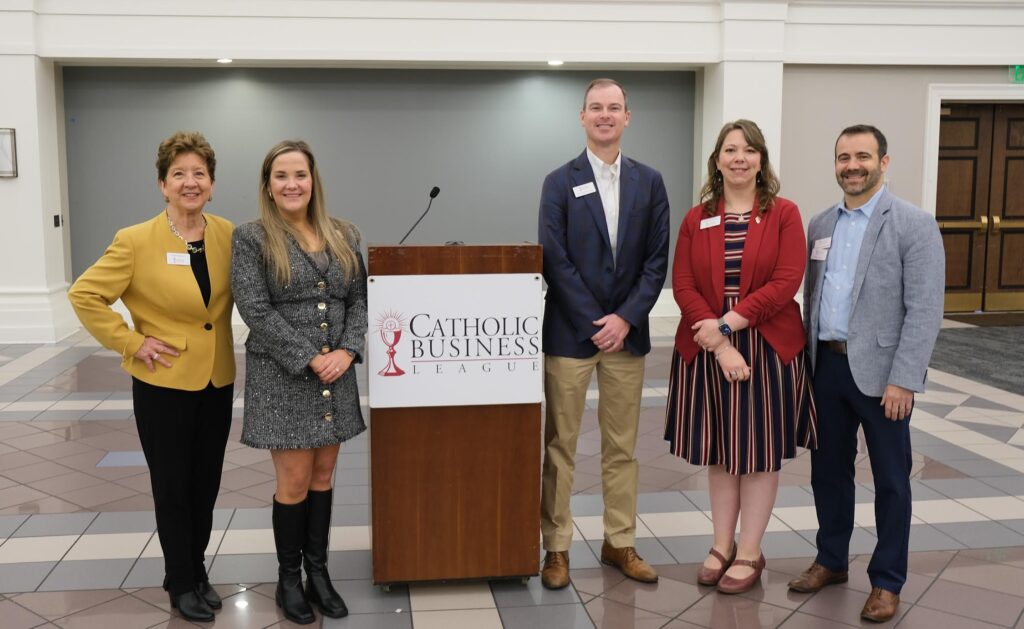
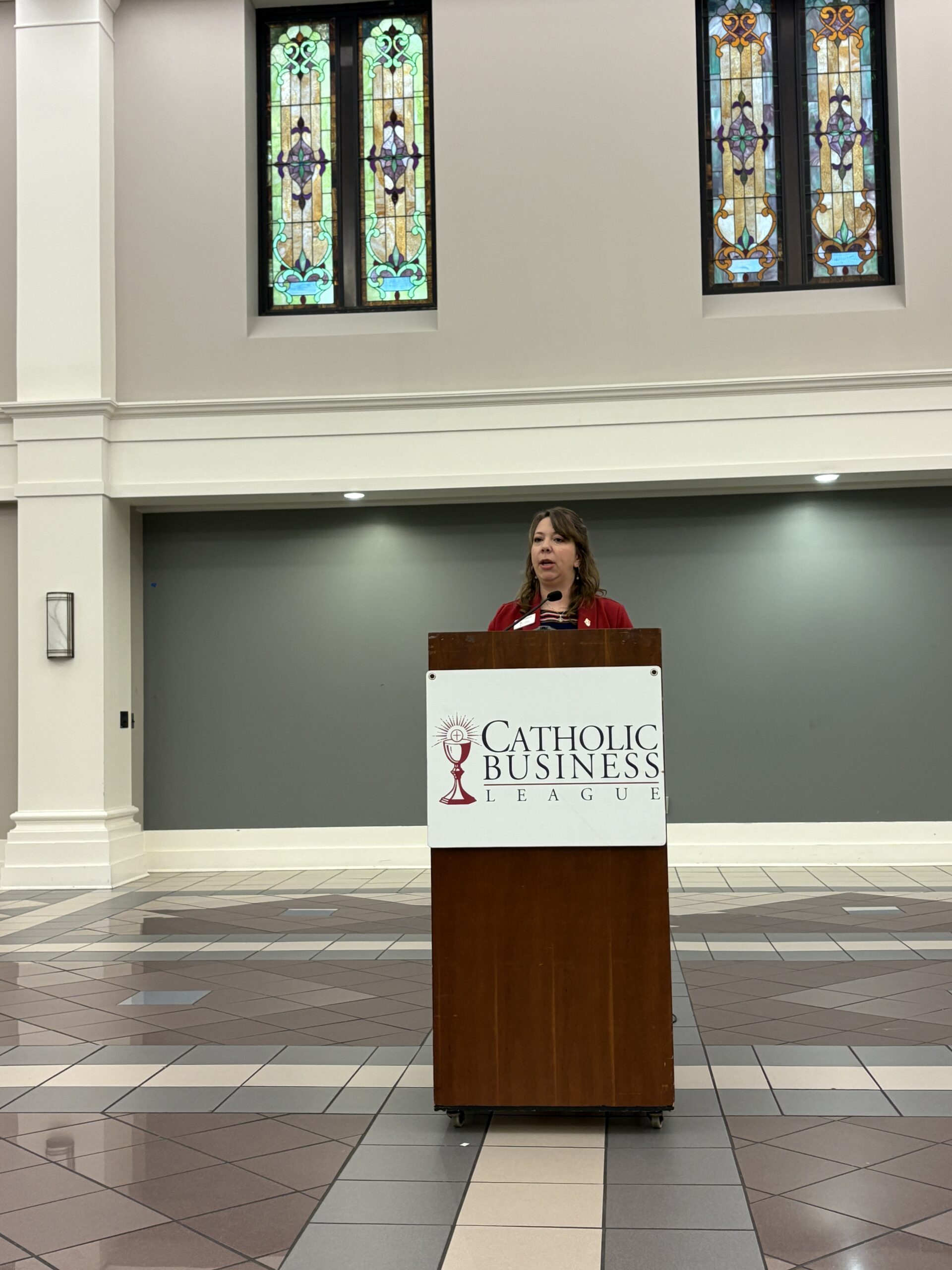
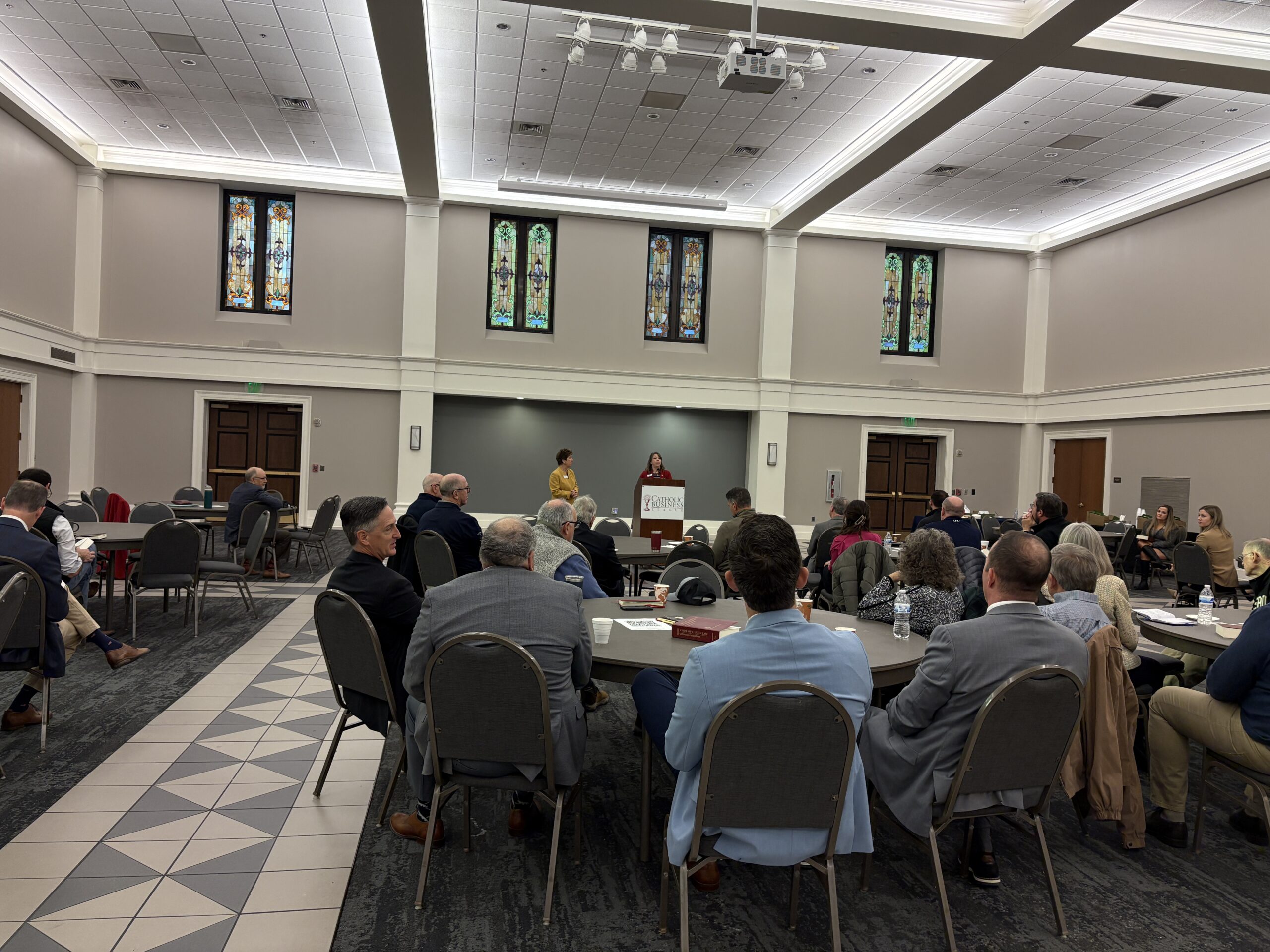
As we approach Thanksgiving, we are extremely grateful for the insight at this morning’s breakfast meeting from Erin Stracener, who shared with us the role of canon law in the life of the Church, and its role in our lives as Catholics.
The majority of canon law is brought forth by the Holy Father, who is the supreme legislator – these “universal” canon laws would apply for the whole world. One example is the way in which the Church would be governed in the event of special circumstances, for instance a papal vacancy, which specify how the Church is run in the absence of a Pope and how the Church must elect a Pope.
On a local level, bishops can create “particular laws” that govern a particular diocese. For example, the universal law defines that a vigil Mass must begin “in the evening”, but the Diocese of Nashville goes deeper and specifies that vigil Masses must start at or after 4:00pm.
It is often believed that canon law applies primarily to marriage; however, only 114 of the 1,752 canons (6.5%) apply to marriage. On the topic of marriage, Stracener pointed out that, according to canon law, the moment of consent is what truly makes the marriage; thus, the priest is not the one marrying a couple, but rather the bride and groom are marrying each other.
A brief overview of each of the seven books of the canon law code:
- General Norms – provides the basics of the law, and how to interpret and apply the canon law
- People of God – describes the structure of the Church, outlines the rights and obligations for the faithful, and defines a “church”, a “pastor” and a “diocese”, among many other terms
- Teaching Office – shares all about the teaching of the Church, especially Catholic education
- Sanctifying Office – discusses the sacraments, defines a “chapel” and “oratory”, discusses marriage in great detail
- Temporal Goods – discusses buying and selling property
- Sanctions – discusses penal (criminal) law governed by the Church
- Processes – lays out the judicial and administrative cases of the Tribunal
Book 2 outlines the rights and obligations for all the Christian faithful, from laypeople to clerics to pastors – with each right comes a corresponding obligation. As laypeople, we have the right to enter a church and worship, and the church has an obligation to permit us to worship and grant us the space to do (at an appropriate time). Other rights for laypeople include: move free of coercion in choosing a saint in life, a right to a Christian education, and a right not to be punished with a canonical penalty except according to canonical law. At the same time, our obligations include maintaining Communion with the Church, assisting with the needs of the Church — including giving of our time, talent and treasure — and building up the kingdom of God through our family.
Today’s meeting brought one of our largest crowds of the year, and we look forward to even more of you joining us when we recognize our 2025 Catholic Professional of the Year — John Gromos — at our next meeting on December 11! We will also have a special appearance from the FRHS Choir, who will sing a selection of Christmas carols at the meeting. A big thank you to meeting sponsor Gabriela Lira, and we’ll see you next month for our final meeting of 2025!